Sunday, 23 October 2011

Concept Development 2

The second stage of the development was to measure the modified chair for dimensions and to redevelop the design with regard to the new dimensions.

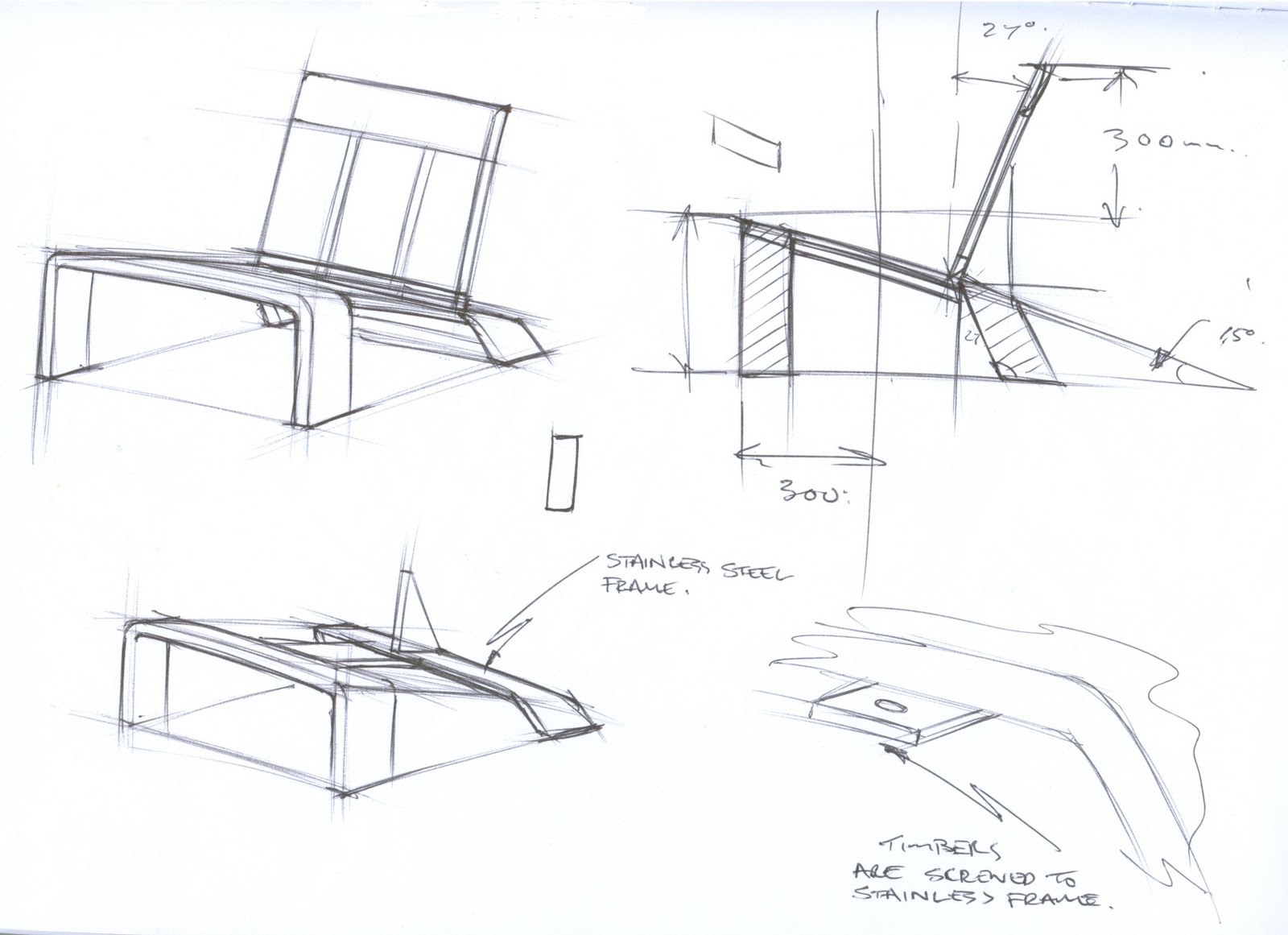
This image shows the initial idea and the basic idea of the size and the basis of the frame and the timber connections.


This second image shows the alternate idea of construction for the chair.


This final image shows the final concept of the construction of the chair, with the timber able to slot into the holes cut in the timber.

Concept Development

After consultation, I decided to develop concept 4.

The main issues that needed to be developed were the size of the materials that would be used in the production of the concept, the seating position and the fabrication methods which would be used to construct it.

As a result of the seating position issue and starting with a bar stool as inspiration, I needed to source another chair to modify to find the seating position I found suitable for my design.


This chair provided an ability to be modified to find the required seating position due to the round bar frame as it is easily cut, bent and welded due to the malleability of the section.


The rear legs were cut 50mm below the seat of the chair and were pressed back until the fresh cut met the seat of the chair and welded into place. this provided a more relaxed seating position for the user, while this chair was still usable the rear legs of the new chair would need to run back further than that of the back rest.
Saturday, 24 September 2011

Concepts


Ideation and Concept 3


The ideation explores the design of a low seat and the style of frame to hold it off the ground. I played with the idea of a cantilever arm rest and a fold able design
 There was also some play with the combination of timber and steel, while also looking at a combination of hard and soft edges.

Research Part C

To look for inspiration for an outdoor chair I looked at the Keystone Adirondack Chair. It uses timber as the primary material with a number of galvanized nuts and bolts as fixings.

The advantages of this design are the use of mainly common parts and simple fixings.

The low seating design is the main appeal for my outdoor chair, as it provides the user with the feeling that they are almost lying on the ground without being in the dirt.

The chair is a rigid design and once constructed is not able to be packed away and because of this the timbers used in the product are thick and sealed to protect them from the elements.
The timber helps to create a warm and welcoming feel to the design of the seat.


<http://www.cedarstore.com/AlternateViewsPopup.aspx?ID=6445> Viewed 17/9/11

Monday, 5 September 2011

Ideation and Concept 2


Consultation

After consultation with Daniel, it was decided that a stool wasn't a chair and that a chair was a seat with four legs and a back rest and the users feet touching the ground.

With this 'new' brief I attempted to apply the characteristics of the bar stool design concepts to a new chair design. Through this process the seat design was dropped, this was partly due to the aesthetic, and the stainless steel frame was developed and evolved into an outdoor chair.

The outdoor chair was going to focus on the use of stainless steel, this is due to the anti corrosion properties and suitability for outdoor use, a slightly reclined seating position to promote a relaxed feel, simple production method using the materials and attempt to hide fixing techniques.